Legal AI for startups
Move fast without breaking the legal stack
Ask Genie to draft a customer agreement for our startup workflow...
Ask Genie to draft a customer agreement for our startup workflow...
Ask Genie to review this counterparty MSA against our startup playbook...
Ask Genie to find the right template for our startup workflow...




Trusted by 200,000+ Professionals


New to GenieAI?
Legal AI that scales with you
GenieAI is the AI legal assistant trusted by 200,000+ business teams. We draft, review, and negotiate every contract a startup needs - fundraising, customer MSAs, employment, IP assignments - with current-law accuracy across 150+ jurisdictions, with no per-seat tax.
- Auto-draft SAFEs, term sheets, MSAs, and employment agreements
- Negotiate within a playbook before you can afford a GC
- 500+ founder-ready templates across 150+ jurisdictions, free to use
What you can do
Use cases for Startup
Each of these is a workflow Genie handles end-to-end. Click any use case to see how it works.
How we compare
How does GenieAI compare to ChatGPT?
Other company types
Genie for every company
Common questions
Startup FAQs
What contracts does a startup need before its first customer?
Terms and conditions or a customer agreement, an NDA for early conversations, IP assignments from founders and contractors, and a data processing agreement if you handle customer personal data.
The IP assignments matter most and are missed most often. Investors check them, and a missing founder assignment is expensive to fix once someone has left.
We are raising a round. Which documents are involved?
Typically a term sheet, then a subscription agreement or investment agreement, a shareholders agreement, amended articles and a disclosure letter. Early rounds often use a convertible instrument instead of a priced round.
The term sheet is not usually binding on the commercial terms, but it sets the position everything else is drafted from, so it is worth more attention than its length suggests.
Do we need IP assignments from founders and contractors?
Yes. Work created by a contractor belongs to the contractor unless it has been assigned in writing, and the same applies to anything a founder built before the company existed. An IP assignment moves it to the company.
This is the first thing diligence checks and the hardest to fix retrospectively, because it depends on people who may no longer be involved.
A customer sent their own MSA. What should we push back on?
Uncapped liability, broad indemnities, termination for convenience at short notice, IP grants wider than the service requires, and auto-renewal with unilateral price escalation.
A first enterprise customer often sends paper written for much larger suppliers. Accepting it whole can create obligations the business cannot meet at its current size.
What should a founders agreement cover?
Equity split and vesting, roles and decision making, what happens when a founder leaves, and ownership of anything created before incorporation. A founders agreement settles it while the relationship is good.
Vesting is the provision that matters most. Without it, a founder who leaves in year one keeps a stake the company then cannot offer to their replacement.
Is GenieAI right for early-stage startups?
Yes. GenieAI scales with you from incorporation to Series E. Pre-seed and seed-stage startups use it for fundraising paperwork, customer contracts, and employment agreements without needing a full-time lawyer.
How does GenieAI pricing work for startups?
GenieAI offers a free tier for early-stage teams and discounted seat pricing for venture-backed startups. Talk to us about credits for portfolio companies of major VCs.
Can GenieAI help with fundraising?
Yes. SAFEs, convertible notes, subscription agreements, shareholder agreements, side letters - GenieAI generates the full fundraising stack to current market terms for your stage and jurisdiction.
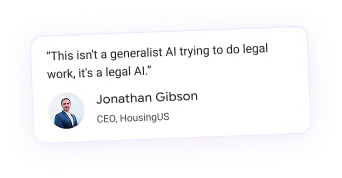
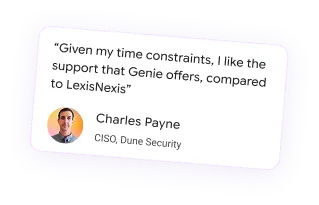

Trusted by 200,000+ users
Drafts, reviews, and negotiates contracts autonomously.

A legal brain for every
business team
Continue with Google
Continue with Email