Apresentando Eidetic Intelligence: Como Genie Alcança 90% de Precisão Jurídica

Hoje estamos anunciando Eidetic Intelligence, uma arquitetura de IA líder no setor, com patente pendente, criada especificamente para trabalho jurídico que não esquece, não alucina e não pula detalhes. É o motor central da plataforma de IA jurídica da Genie e representa um desvio fundamental de como todos os outros sistemas de IA abordam tarefas jurídicas.
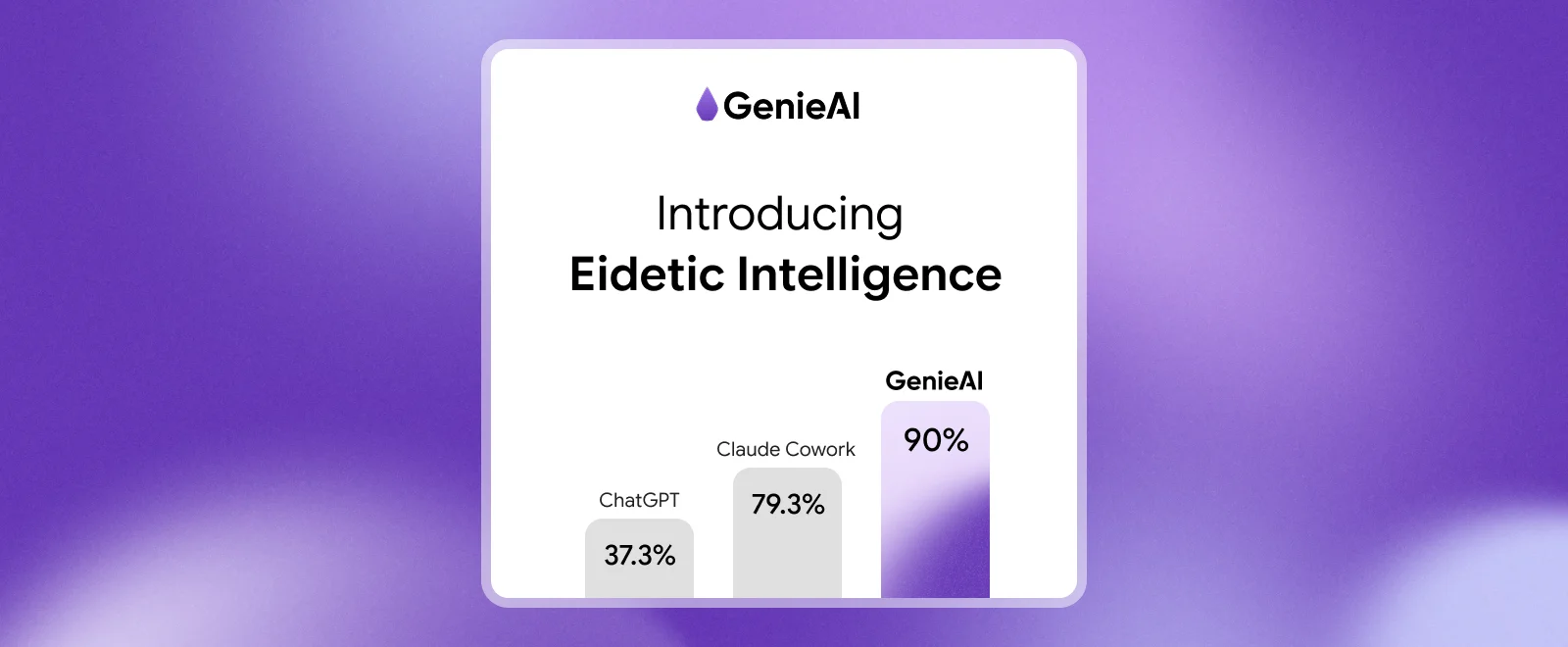
Pelo que sabemos, esta é a IA com melhor desempenho em benchmarks jurídicos do mundo. Para tanto, estamos publicando os resultados de um rigoroso estudo comparativo tridireccional realizado internamente na GenieAI, simulando um cenário de expansão europeia da Tesla em 65 documentos de origem. Os resultados são claros: Genie obteve 135/150 (A+), o CoWork da Anthropic obteve 119/150 (B+) e o ChatGPT da OpenAI obteve 56/150 (F).
Estamos entusiasmados em apresentar os benefícios de uma camada de processamento extensiva, arquitetônica, algorítmica e específica para jurídica sobre modelos de linguagem padrão, em comparação com o uso de um chatbot de propósito geral em um domínio para o qual nunca foi projetado.
O Problema: Por Que a IA de Propósito Geral Falha no Direito
Modelos de linguagem grandes são extraordinários em gerar texto fluente. Eles são inadequados para as coisas específicas que o trabalho jurídico exige: referência cruzada precisa em dezenas de documentos, figuras financeiras consistentes, análise de lacunas regulatórias e raciocínio apoiado em evidências que resistiria ao escrutínio em uma sala de reuniões ou tribunal.
Os modos de falha estão bem documentados. Os modelos de linguagem grandes exibem comportamento não determinístico, em que prompts idênticos produzem saídas diferentes. Eles têm memória de trabalho limitada restringida por janelas de contexto, o que significa que os detalhes anteriores são perdidos durante tarefas prolongadas. E possuem auto-validação fraca: sem verificação externa, uma IA não pode avaliar de forma confiável a correção ou completude de sua própria saída.
No trabalho jurídico, estes não são incômodos menores. Eles produzem contratos não executáveis, exposições regulatórias perdidas e figuras financeiras fabricadas apresentadas com a confiança de um fato verificado. Quando o ChatGPT diz a um conselho que o preço médio de venda da Tesla é €45.000 (o valor real é €28.500-39.500), a análise descendente construída sobre essa figura é pior que inútil. É ativamente enganosa.
Apresentando Eidetic Intelligence
Eidetic Intelligence é o nome que damos à Arquitetura de Máquina de Estado Auto-Corrigível com Porta de Qualidade, com patente pendente, da Genie. O Escritório de Propriedade Intelectual do Reino Unido recebeu nossa solicitação de patente (LW1: Variance Control) em 3 de fevereiro de 2026. A tecnologia representa uma nova classe de sistema de IA: um que não depende das tendências probabilísticas de modelos de linguagem grandes, mas que impõe controle determinístico sobre cada etapa de um fluxo de trabalho jurídico.
O nome "Eidetic" é deliberado. Na ciência cognitiva, memória eidética refere-se à capacidade de recordar informações com precisão fotográfica. É exatamente o que esta arquitetura alcança: recordação perfeita de cada documento, cada cláusula, cada figura e cada requisito regulatório, independentemente de quantos materiais-fonte estejam envolvidos.
Como Funciona
Em sua essência, a Inteligência Eidética decompõe tarefas jurídicas complexas em estados discretos e ordenados, cada um dos quais deve produzir um artefato validado antes que o sistema possa avançar. Pense nisso como uma sinapse biológica: a informação só dispara para o próximo estágio quando a intensidade do sinal (qualidade) ultrapassa um limite.
A arquitetura possui seis componentes principais:
| Componente | Função |
|---|---|
| Controlador de Máquina de Estados | Orquestra fluxos de trabalho com transições de estado determinísticas. Nenhum estado é pulado, nenhum atalho é tomado. |
| Agentes de Produção | Agentes de IA especializados (Planejador Jurídico, Especialista em Contratos, Gerador de Documentos) que geram artefatos em cada estágio. |
| Portais de Qualidade | Validadores de IA independentes que aplicam avaliação obrigatória APROVADO/REPROVADO em cada transição de estado. Arquitetonicamente separados dos agentes de produção. |
| Armazenamento de Definição de Pronto (DoD) | Critérios de conclusão legíveis por máquina que são dinamicamente refinávéis. O sistema se auto-recupera quando as especificações iniciais se mostram insuficientes. |
| Sistema de Memória Externa | Memória baseada em artefatos que elimina dependência de janela de contexto. Resultados anteriores são persistidos e recarregados conforme necessário, fornecendo ao IA recordação perfeita. |
| Portal de Qualidade de Trilha de Auditoria | Monitora padrões de fluxo de trabalho cumulativos e pode injetar dinamicamente estados adicionais quando problemas de qualidade sistêmica são detectados. |
A inovação crítica é o loop de correção iterativa limitada. Quando um Portal de Qualidade retorna REPROVADO, o sistema não simplesmente tenta novamente às cegas. Ele gera feedback estruturado identificando deficiências específicas, níveis de severidade e instruções de remediação. O Agente de Produção então realiza correções direcionadas. Se o limite máximo de iterações for atingido (tipicamente três tentativas), o sistema escala para um humano. Criticamente, o feedback humano pode atualizar dinamicamente as próprias especificações DoD, permitindo ao sistema aprender e se adaptar em tempo real.
O resultado é a saída de IA que foi objetivamente validada contra padrões de qualidade predefinidos em cada estágio. Não no final, não em um loop de revisão, mas continuamente durante todo o fluxo de trabalho. Isto representa um marco no direito de IA, tornando GenieAI o IA jurídico de melhor desempenho do mundo, conforme nosso conhecimento.
Processamento de Documentos: Comprimento de Contexto e Qualidade
Uma pergunta comum é como diferentes sistemas de IA lidam com grandes conjuntos de documentos. Todos os três sistemas podem processar documentos de qualquer comprimento dividindo-os em pedaços menores. A diferença está no que acontece após o particionamento.
Modelos de uso geral como ChatGPT e Claude dependem de estratégias de particionamento padrão que inevitavelmente fragmentam as relações entre cláusulas, cronogramas e contrapartes em um conjunto de documentos. Genie vai além ao manter representações estruturadas de cláusulas e suas relações por meio de relações gráficas semânticas, uma estrutura de dados baseada em grafos proprietária que preserva conexões entre documentos, sequenciamento temporal e relações de entidades. Esta é uma razão-chave pela qual Genie produz menos alucinações e maior qualidade jurídica.
| Funcionalidade | GenieAI | CoWork (Claude) | ChatGPT |
|---|---|---|---|
| Processa documentos de qualquer tamanho | ✓ Sim | ✓ Sim | ✓ Sim |
| Método de fragmentação | Fragmentação estruturada em grafo semântico | Fragmentação de texto padrão | Fragmentação de texto padrão |
| Preserva relacionamentos em nível de cláusula entre fragmentos | ✓ Sim (grafo semântico) | ✗ Não | ✗ Não |
| Mantém sequenciamento temporal entre documentos | ✓ Sim (grafo semântico) | ✗ Não | ✗ Não |
| Mapeamento de entidades e contrapartes entre documentos | ✓ Sim (grafo semântico) | ✗ Não | ✗ Não |
| Risco de alucinação em grandes conjuntos de documentos | Baixo (recuperação estruturada) | Médio (degradação de contexto) | Alto (degradação de contexto) |
| Pontuação de Síntese de Referência Cruzada | 10 / 10 | 7 / 10 | 3 / 10 |
Os resultados do benchmark refletem isso diretamente. A abordagem alimentada por GLF do Genie obteve 10/10 em Síntese de Referência Cruzada, comparado a 7/10 para CoWork e 3/10 para ChatGPT. Quando os relacionamentos entre cláusulas, contrapartes e cronogramas são preservados estruturalmente, em vez de reconstruídos a partir de fragmentos de texto fragmentados, a análise jurídica posterior é materialmente superior.
A Prova: Benchmark de Simulação Tesla
Afirmações são fáceis. Dados são mais difíceis. Desenvolvemos um benchmark para testar sistemas de IA jurídica sob condições que refletem a complexidade do mundo real: um cenário simulado de expansão europeia da Tesla envolvendo 65 documentos de origem, incluindo contratos, atas de reuniões do conselho, demonstrações financeiras, registros regulatórios e evidência de denunciante.
A tarefa: produzir uma avaliação abrangente de risco cobrindo exposições de parceria com números financeiros específicos, desafios regulatórios com projeções de impacto na receita e objetivos estratégicos de discussões do conselho. Exatamente o tipo de trabalho que um escritório de Conselheiro Geral encomendaria para uma decisão de parceria estratégica de 2,5 bilhões de euros.
Avaliamos três sistemas: GenieAI, CoWork (Claude) da Anthropic e ChatGPT da OpenAI. Cada sistema foi avaliado em 15 métricas de qualidade jurídica, com pontuação de 1-10 para um máximo de 150 pontos.
Resultados Gerais
| GenieAI | CoWork (Claude) | ChatGPT | |
|---|---|---|---|
| Pontuação | 135 / 150 | 119 / 150 | 56 / 150 |
| Percentual | 90,0% | 79,3% | 37,3% |
| Conceito | A+ | B+ | F |
GenieAI conquistou o primeiro A+ no histórico de nossos benchmarks, com sete pontuações perfeitas de 10/10 em Precisão Factual, Cobertura de Risco, Cobertura Regulatória, Quantificação Financeira, Síntese de Referência Cruzada e Cobertura de Pontos-Chave. Esta é a avaliação de risco mais abrangente que já vimos de qualquer sistema de IA: profundidade em nível de conselho combinada com amplitude em nível de litígio.
Análise Métrica por Métrica
| Métrica | GenieAI | CoWork | ChatGPT |
|---|---|---|---|
| Precisão Factual | 10 | 8 | 6 |
| Atribuição de Fontes | 9 | 8 | 5 |
| Raciocínio Jurídico | 8 | 8 | 4 |
| Cobertura de Riscos | 10 | 8 | 5 |
| Qualidade Probatória | 9 | 7 | 5 |
| Cobertura Regulatória | 10 | 9 | 1 |
| Quantificação Financeira | 10 | 8 | 5 |
| Síntese de Referências Cruzadas | 10 | 7 | 3 |
| Risco da Contraparte | 9 | 7 | 3 |
| Análise de Cláusulas | 7 | 8 | 3 |
| Acionabilidade | 7 | 8 | 5 |
| Cobertura de Pontos-Chave | 10 | 9 | 2 |
| Postura Disputável | 8 | 8 | 2 |
| Rastreamento de Cronograma | 9 | 8 | 3 |
| Precisão Jurídica | 9 | 8 | 4 |
| TOTAL | 135 | 119 | 56 |
O Que as Pontuações Revelam
GenieAI: Nível Litigioso + Pronto para Conselho (A+)
Genie cobriu todos os 8 pontos-chave esperados, identificou 5 parcerias (incluindo o contexto histórico da Panasonic), analisou ambos os fluxos regulatórios (crise de Aprovação de Tipo e Regulamento de Baterias da UE) e sintetizou insights de todas as 4 reuniões de conselho. Sua análise de risco transversal de 10 pontos identificou padrões sistêmicos (uma escalação de concentração de 12× em dependência de fornecedor, desvios de autorização do conselho e lacunas de conhecimento da própria Tesla) que nenhum outro sistema surfou.
Isto é o que a Inteligência Eidética permite: a capacidade de manter 65 documentos em fidelidade perfeita, fazer referência cruzada em todos eles e trazer à superfície os padrões que emergem apenas quando você vê o quadro completo.
CoWork (Claude): Competente, mas Superficial em Mineração de Documentos (B+)
O CoWork da Anthropic produziu uma avaliação jurídica de risco competente com a análise de cláusulas mais forte em todos os contratos. Seu plano de ação em três camadas com fornecedores nomeados e estratégias de aquisição foi bem estruturado. No entanto, lhe faltava a profundidade de mineração de documentos para trazer à superfície evidência de denunciante, trajetórias de insolvência e cadeias de risco em cascata. A lacuna de 16 pontos entre Genie e CoWork foi impulsionada principalmente por vantagens baseadas em RAG em síntese de referências cruzadas, precisão financeira e análise de contraparte.
ChatGPT: Fundamentalmente Insuficiente para Trabalho Jurídico (F)
O resultado do ChatGPT não é um caso limítrofe. Com uma pontuação de 56/150 e uma nota F, perdeu completamente a QuantumFlux (um alvo de aquisição-chave para reduzir dependência de fonte única), não forneceu cobertura regulatória (nenhuma crise de Aprovação de Tipo, nenhum Regulamento de Baterias da UE), abordou apenas 2 dos 8 pontos esperados e construiu projeções financeiras em figuras de base incorretas (ASP de €45K versus €28.5K–39.5K reais).
Mais preocupante: ChatGPT apresentou extrapolações especulativas como projeções quase-autoritárias. Uma figura de impacto de €4.7 bilhões baseada em um modelo de disrupção de Berlin de 20% soa impressionante, até você perceber que está construída no preço médio de venda errado. Isso não é análise financeira. É ficção financeira.
Os Seis Maiores Déficits de Pontuação do ChatGPT Versus GenieAI
| Déficit | Métrica | O Que ChatGPT Perdeu |
|---|---|---|
| −9 | Cobertura Regulatória | Zero crise de Aprovação de Tipo. Zero Regulamento de Baterias da UE. |
| −8 | Cobertura de Pontos-Chave | Apenas 2 dos 8 pontos esperados abordados. |
| −7 | Síntese de Referências Cruzadas | Riscos tratados como silos isolados sem interconexão. |
| −6 | Risco da Contraparte | Nenhum índice financeiro, nenhuma análise de cronograma de insolvência. |
| −6 | Postura Disputável | Enquadramento binário sem avaliação de probabilidade. |
| −5 | Quantificação Financeira | Extrapolações especulativas em figuras de base incorretas. |
Por Que a Inteligência Eidética Muda Tudo
A lacuna de 79 pontos entre GenieAI e ChatGPT não é uma diferença em qualidade de modelo. É uma diferença em arquitetura. ChatGPT é um modelo de linguagem de uso geral solicitado a fazer análise jurídica. Genie é um sistema de inteligência jurídica construído para fins específicos que usa modelos de linguagem como componentes dentro de um pipeline controlado e validado.
Três vantagens arquiteturais impulsionam o diferencial de desempenho:
1. Mineração de Documentos com RAG
A Eidetic Intelligence não resume documentos. Ela os mineração. Por meio da geração aumentada por recuperação vinculada à nossa máquina de estado, toda alegação é rastreável até um documento de origem, toda figura é verificável, e a síntese de referência cruzada ocorre automaticamente em todo o corpus de documentos. É por isso que o Genie obteve 10/10 em Síntese de Referência Cruzada enquanto ChatGPT obteve 3.
2. Portas de Qualidade Previnem Propagação de Erros
Em uma IA de propósito geral, um erro no primeiro passo corrompe silenciosamente tudo a jusante. Na Eidetic Intelligence, nenhum artefato avança para o próximo estágio sem passar pela validação autônoma. Figura financeira incorreta? Detectada. Análise regulatória faltando? Detectada. Referência cruzada inconsistente? Detectada. Toda vez, antes que possa contaminar a análise subsequente.
3. Memória Externa Elimina Degradação de Contexto
No caso do ChatGPT, não conseguiu ler o conjunto de dados de 65 documentos, então tivemos que reduzi-lo para 40 - mesmo assim, falhou. No geral, ChatGPT lutou para lidar com contextos amplos, então tivemos que compactar e mesclar documentos manualmente. Diferentemente da Eidetic Intelligence do GenieAI, onde o conjunto de dados de 65 documentos foi facilmente carregado e analisado. O Sistema de Memória Externa da Eidetic Intelligence persiste em cada artefato intermediário e recarrega contexto relevante conforme necessário. Documento 1 é tão vívido para o sistema quanto Documento 65. É assim que o Genie identifica padrões, como uma escalação de concentração de 12 vezes na dependência de fornecedores, que exigem manter a imagem completa em fidelidade perfeita.
4. Memória Eidética do GenieAI: Introduzindo Comprimento de Contexto Ilimitado
Onde ChatGPT não conseguiu carregar todo o conjunto de dados de documentos, e Claude parou algumas vezes onde tivemos que retomar manualmente a sessão, GenieAI foi capaz de trabalhar autonomamente por 18 minutos, introduzindo uma nova era de IA onde IAs trabalham autonomamente lado a lado conosco, sem necessidade de supervisão. Isso é possível graças à inteligência eidética onde o fragmentação de documentos é gerenciada inteligentemente, garantindo qualidade em cada estágio, permitindo o gerenciamento de potencialmente contextos de comprimento ilimitado com degradação mínima em qualidade e precisão.
A Conclusão: GenieAI é a IA Jurídica Mais Precisa do Mundo
O benchmark revela uma clara estrutura de camadas. GenieAI (A+, 90%) oferece avaliação de risco em nível de litigância por meio de arquitetura patenteada. CoWork (B+, 79,3%) produz análise jurídica competente com fortes recomendações estruturais. ChatGPT (F, 37,3%) falha fundamentalmente para produtos de trabalho jurídico. Sua força na modelagem de cenários financeiros é uma disciplina diferente daquela que profissionais do direito realmente precisam.
A diferença de 79 pontos entre GenieAI e ChatGPT, e a diferença de 63 pontos entre CoWork e ChatGPT, demonstram uma verdade simples: o acesso a documentos de origem não é meramente útil mas decisivo para produtos de trabalho jurídico de qualidade. Arquitetura importa. Validação importa. Recuperação perfeita importa.
É isso que Eidetic Intelligence oferece. Não um chatbot melhor, mas uma classe fundamentalmente diferente de IA jurídica.
Pronto para ver Eidetic Intelligence em ação?
Agende uma Demonstração em meet.genieai.co
Baixe os Dados Completos do Benchmark
A estrutura completa de pontuação, definições de métricas e resultados brutos do benchmark estão disponíveis para download.
⬇ Baixar Dados do Benchmark (ZIP)
Metodologia
Estrutura de Pontuação de Qualidade Jurídica: 15 métricas, 65 documentos de origem, caso simulado de expansão europeia da Tesla, comparação tripla. Todos os sistemas testados com prompts e acesso a documentos idênticos. Dados completos do benchmark disponíveis aqui.
Patente: Pedido de Patente do Reino Unido, Controle de Variância LW1. Depositado por GenieAI Limited. Recebido pela Agência de Propriedade Intelectual do Reino Unido em 3 de fevereiro de 2026.
© 2026 GenieAI Ltd. Todos os direitos reservados.
A former bond and derivatives trader who managed a £1bn portfolio at an investment bank - he left finance to pursue an MSc in Machine Learning taught by Google DeepMind - where he met co-founder Nitish and set out to fix the legal industry.
.png)